⚖️
Zakat fund separation, by design
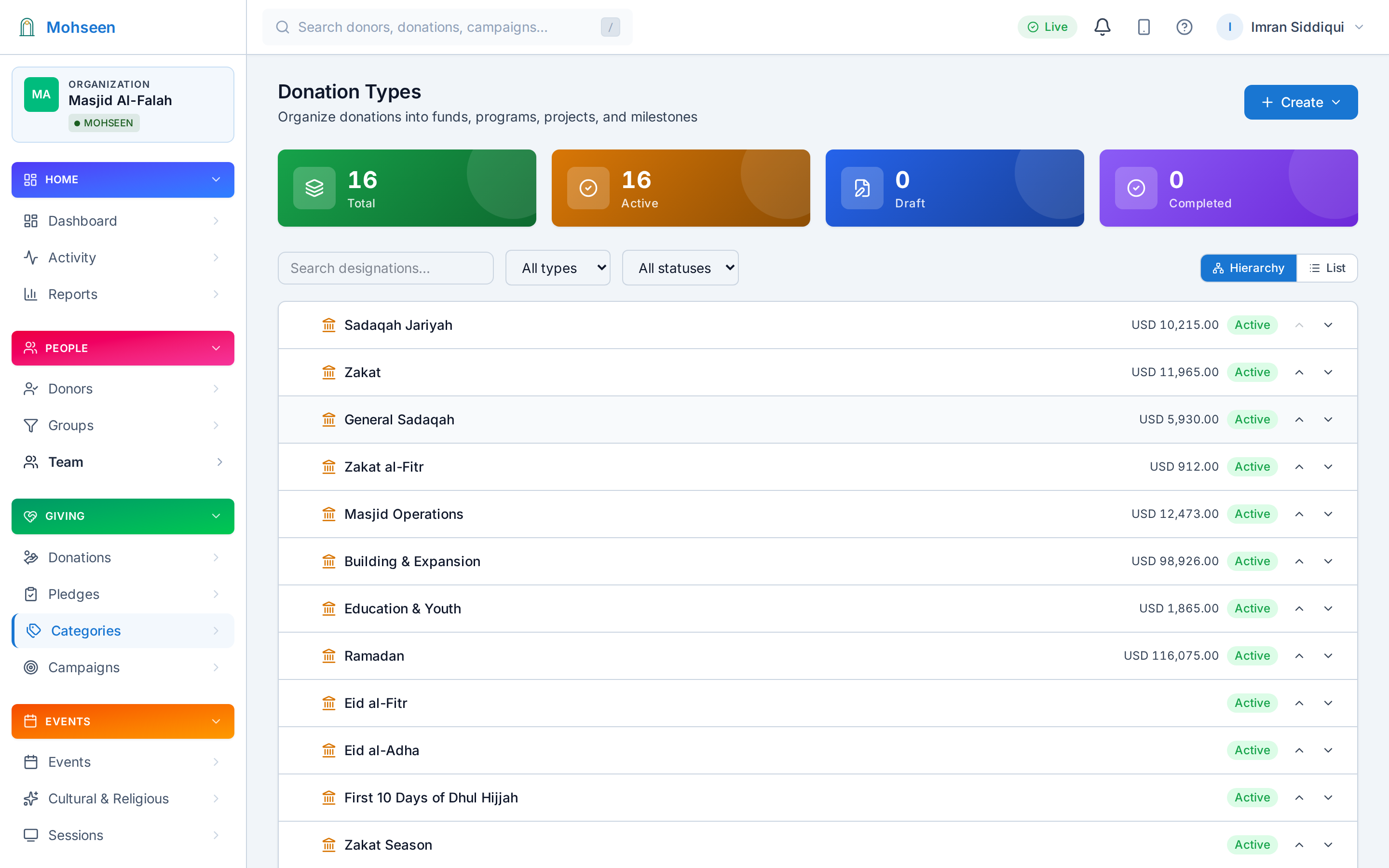
Zakat lives in its own fund, never mixed with voluntary Sadaqah or operational giving. The separation is built into the ledger itself — every Zakat transaction lands in a tamper-evident audit log — so the shura and the auditors can both verify it.
🔁
Zakat as an annual rhythm
Contributors who pay Zakat through your organisation can set a zakat-annual recurring intent — chosen at checkout, renewed each year, with renewal alerts and self-service management from the contributor portal.
📊
Per-contributor Zakat history
Every Zakat payment tracked under the Zakat fund, year on year — visible to the contributor in their portal and to the admin for record-keeping, with Hijri and civil dates shown side by side.
📜
Receipts & year-end statements
Country-aware tax receipts and per-giver annual statements covering Zakat paid through the platform: US 501(c)(3), Canada, UK Gift Aid receipt flagging, India 80G, Bangladesh NGO-Affairs-ready formats.
🎯
Designated Zakat programmes
Zakat must reach eligible recipients (the Asnaf). Admins designate which Zakat-funded programmes the fund supports, and the audit log keeps the trail from contribution to designation.
📅
Ramadan Zakat emphasis
Many Muslims choose to pay Zakat during Ramadan, when giving runs 2–4×. The Ramadan readiness built into Mohseen includes Zakat framing in the month's appeals — drafted ahead, approved by your staff.